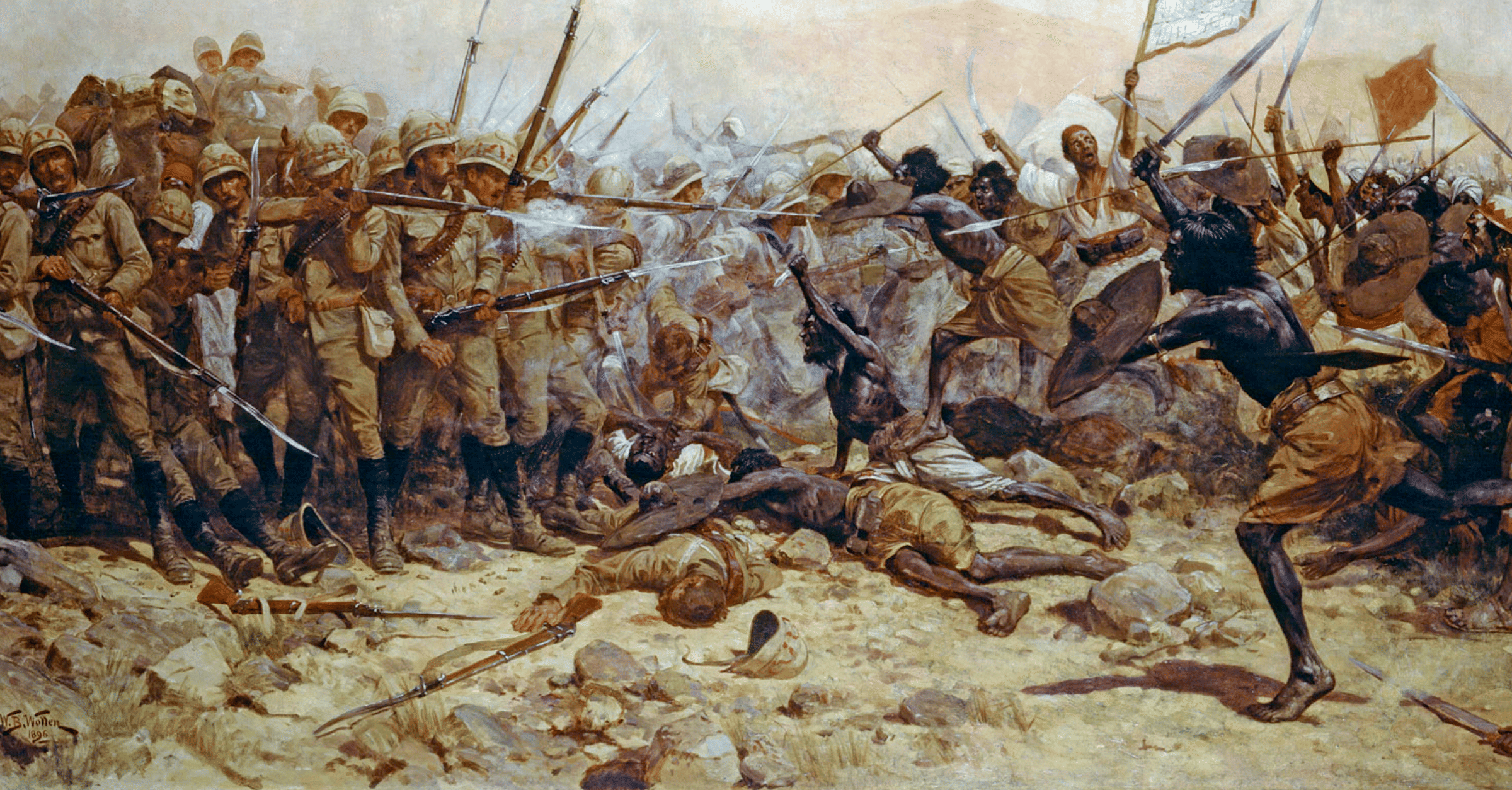
The Mahdist War (1881-99) in Sudan was led by the inspirational Muhammad Ahmad, an Islamic holy man who declared himself the Mahdi (the Messiah). The Mahdists wanted to overthrow Ottoman-Egyptian rule in Sudan and spread a new form of Islam both in Sudan and elsewhere. Famously laying siege to Khartoum and killing the British national hero General Gordon, the Mahdists were finally defeated by an A...
The Mahdist War exemplifies the collision of religious revivalism, anti-colonial resistance, and imperial ambition. At its strongest, the narrative highlights the agency of Sudanese actors in resisting foreign domination, framed by Muhammad Ahmad’s messianic vision and the Mahdists’ military successes. The British response—delayed, then overwhelming—reveals the prioritization of strategic interests (the Nile, Suez Canal) over humanitarian concerns, as seen in Gordon’s abandonment and the later b...